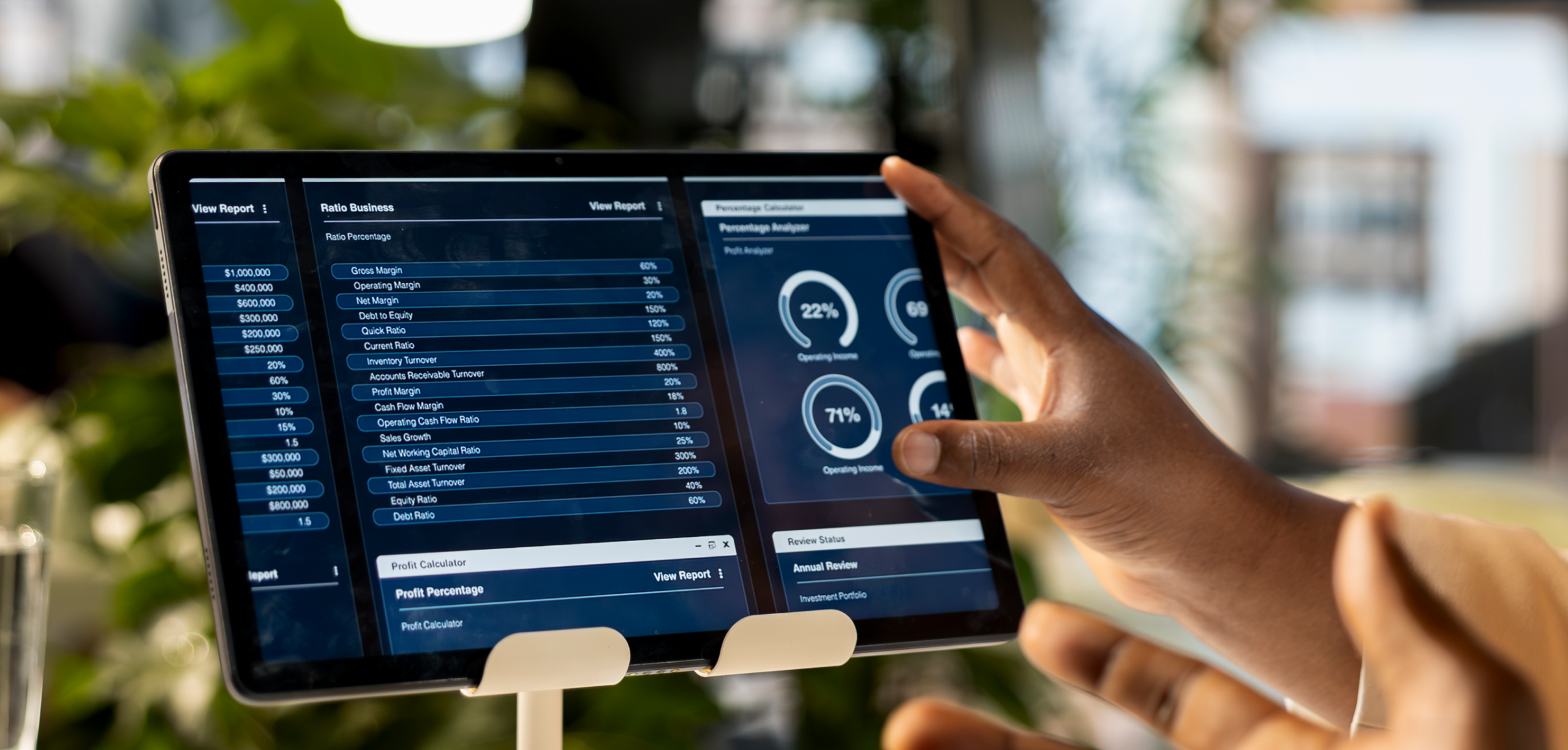
The moment when information stops flowing
When a company starts, almost everything seems manageable. Invoices are made with a simple tool, customers are managed with day-to-day experience, and key information is usually in the heads of the people running the business. But this fragile balance is broken as the company grows.
Not because growth is a problem, but because the way we work is no longer sufficient to sustain it.
Over time, many companies accumulate tools, processes and one-off solutions. Each area works, but does so independently. Data is duplicated, errors appear and management begins to make decisions with partial or outdated information.
At this point, the real problem is not operational, but strategic. Without a global view of the business, it is difficult to anticipate problems, control costs, or truly understand what is working and what is not.
This is where an ERP stops being an option and becomes a necessity.
An ERP is not a program, it is the core of the business
An ERP is often confused with a simple billing program or a collection of modules. But a real ERP goes much further.
It is the system that connects all the pieces of the business and allows information to flow coherently between people,
processes and decisions.
When the company works with a single system, data ceases to be a problem and becomes a tool. Management can analyze, plan and make decisions with confidence, because they know that the information is reliable.
The reality of Andorra: different companies, different needs
In the Andorran business community, this issue is particularly relevant. Many companies have very specific business models,
with operational particularities that do not fit well with standard solutions designed for larger or generic markets.
Forcing the business to adapt to closed software usually generates frustration, inefficiencies and, in the long term, a brake on growth.
Software should be a tool at the service of the business, not a limitation.
When the software adapts to the company (and not the other way around)
This is where the difference between a generic ERP and a custom ERP becomes apparent. Software truly designed for the business allows you to start with a simple structure and evolve over time, adding functionality as the business needs it.
This flexibility is key to maintaining control without adding unnecessary complexity. The system grows at the same pace as the company, without traumatic migrations or radical changes.
ANNEX: a tailor-made ERP for companies that want control
ANNEX is the proprietary ERP system developed by PROGDEV to respond to this real need for control and adaptation.
It is not a closed solution or a generic product, but a modular and flexible tool that adapts to the way each company works.
It allows you to centralize business management, control daily operations and obtain a clear view of performance, all from a single environment.
In addition, it can be used both from desktop and from the web and mobile devices, making it easier to work in any context.
An ERP that accompanies business growth
ANNEX is designed so that the company does not have to change systems every time it evolves. The software adapts, incorporates new modules and maintains data consistency, guaranteeing traceability and continuity.
This allows Andorran companies to grow safely, maintaining control of the business and making decisions based on real data, not intuition.
Technology with business criteria
At PROGDEV we understand ERP as a strategic tool, not a simple technological implementation. That’s why, before talking about software, we analyze the business, processes and real needs of each company.
ANNEX is the result of this vision: a tailor-made ERP, designed for companies that want to grow without losing control.
Do you want to see how ANNEX could work in your company?
Every business is different, and a customized ERP only makes sense when it adapts to a specific reality. Therefore, the best way to understand ANNEX is to see it in action applied to your case.
You can request a personalized demonstration and discover how ANNEX can become the control center of your business.
Frequently asked questions
1. What are the best business ERP systems available in Andorra?
It depends on the type of company you run and what you need to manage: accounting and invoicing, purchasing and sales, inventory, projects, treasury, reporting, and integrations. In Andorra, what matters most is not the “brand name” of the ERP, but whether it is properly adapted to local regulations, your actual workflows, and the level of support you require. Before choosing, request a demo based on real scenarios from your day to day operations and confirm what is included as standard and what requires additional modules or custom development.
2. What is an ERP system and what benefits does it provide to an SME in Andorra?
An ERP is a system that centralizes your business information and processes in one place: clients, quotes, invoices, purchases, inventory, projects, collections, payments, and reports.
For an SME in Andorra, the key benefit is reducing errors and time wasted between Excel sheets, emails, and disconnected software. It also improves control over margins, cash flow, outstanding debts, and profitability per client, and makes it easier to grow without administrative chaos slowing the company down.
3. What key features should an ERP have for Andorran companies?
At a minimum: invoicing and quotes, purchasing and suppliers, control of collections and payments, document management, role based permissions, traceability of who did what and when, clear reporting, and reliable data exports.
If you manage stock or a warehouse, inventory control and item traceability are critical. And if your operations are project based, you need time tracking, cost control, and margin analysis per project. The key is that these features are properly integrated and not isolated modules that do not communicate with each other.
4. Can I integrate an ERP with my current accounting system in Andorra?
Yes, but it depends on how you currently work and which tools you use. Integration is usually done either through exports (files) or via API, depending on the software.
Before implementing, define what you want to sync (invoices, journal entries, clients, collections, taxes) and how often. If integration is critical, ask them to prove it with a complete real world workflow, not just promises: create an invoice, close the period, export, import, and reconcile the figures.
5. How do you choose the right ERP for a company in Andorra?
Choose it based on real fit, not brand name. Create a shortlist of 5 to 10 processes that consume the most time in your company, such as invoicing, tracking collections, managing inventory, handling projects, or generating reports, and require them to replicate those exact scenarios in a live demo.
Ask what is included as standard, what the implementation cost is, what level of support is provided, and what the realistic timelines are.
If you are looking for a local solution adapted to the Andorran context, there are options developed locally, such as ANNEX by ProgDev, which can be tailored to your company’s workflows and specific needs.
Centralize and control the management of your company with ANNEX
business management