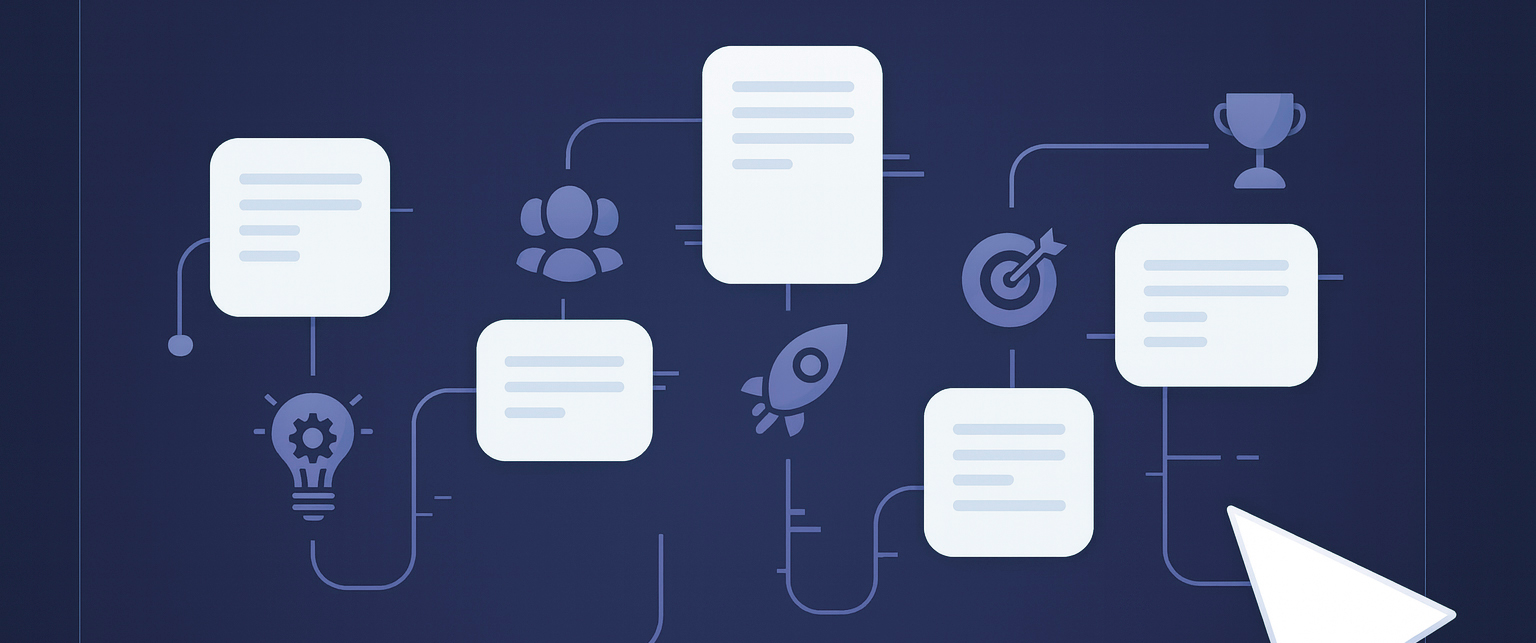
Operational chaos begins when every tool works separately
Many service-based businesses still operate with fragmented processes without realizing how much time and money they lose every single week.
Sales works inside a CRM.
Projects are managed in another tool.
Hours end up in Excel spreadsheets.
Administration handles billing from separate software.
Each department works. But the overall system does not.
At first glance, it seems like a normal workflow. The problem appears over time:
- Hours that never make it into invoices
- Duplicated information
- Teams working with different data
- Lack of real project visibility
- Too much time spent on administrative tasks
And the worst part is that many businesses get used to it.
They work like this for years without realizing how much time they waste simply moving information between tools.
The problem is not the team. It is the system.
As a business grows, it usually adopts new tools to solve specific needs.
First comes a task manager.
Then a ticketing tool.
Later, a new CRM.
And eventually some improvised Excel sheet to track hours or profitability.
Each tool solves part of the problem.
But they rarely share real context with each other.
The result is usually the same:
- projects moving forward without global visibility
- teams constantly asking about task or client status
- administration manually reviewing data before invoicing
- hours logged late or directly lost
The information exists. But it is fragmented.
And when a business depends on multiple disconnected tools, even small changes end up creating more manual processes.
If this sounds familiar, you have an operational problem
What changes when everything is connected?
When projects, hours, and billing work inside the same system, most frictions disappear.
Tracked hours flow directly into billing.
Teams share the same real-time information.
And every project stops being a collection of disconnected tools.
Això no només redueix errors.
També canvia la manera de treballar:
- Less time spent searching for information
- Fewer meetings just to clarify context
- Fewer duplicated processes
- More visibility into workload and profitability
When the entire operation is connected, the business can react earlier, identify problems faster, and make decisions based on real data.
What should modern management software include?
Many tools allow you to manage tasks.
El problema és que poques connecten realment tota l’operativa d’una empresa de serveis.
Modern management software should integrate:
Client CRM:
To centralize history, contacts, documentation, and sales follow-up.
Project management:
To control phases, responsibilities, priorities, and the real status of each project.
Time tracking:
To log time spent on every client or task without manual processes.
Integrated billing:
To automatically generate draft invoices from tracked hours or registered services.
Tickets and support:
To keep incidents and communication inside the same operational context.
When these parts work separately, the business loses efficiency.
When they work together, management becomes far simpler than it seems.
Why do so many businesses end up combining Notion, Trello, and Excel?
Because each tool solves a specific need.
Notion helps document information.
Trello organizes tasks.
Excel allows improvised tracking for hours or reporting.
The problem starts when the business needs to connect real operational processes:
- Hours
- Clients
- Projects
- Billing
- Operational tracking
This is where fragmentation appears.
Information stops flowing naturally, and many tasks begin to depend on manual copying, constant reviews, and processes that are difficult to scale.
It is not a problem with the tools individually.
It is a problem of shared context.
AndCliq: everything connected in one system
AndCliq is designed specifically to centralize the operations of service-based businesses.
The software connects:
- Client CRM
- Projectes
- Tasks
- Time tracking
- Tickets
- Time control
- Billing and recurring services
Everything inside the same environment.
This allows information to stop getting lost between disconnected tools and gives every team real visibility into the business.
When a project moves forward, hours are automatically recorded.
When hours are tracked, they can become billable.
And when the team needs context, all the information is already connected.
No duplicated processes.
No scattered information.
Many businesses live with this chaos for years
And often the real problems only appear once operations begin to grow.
Centralizing projects, hours, and billing is not just about organization.
It is a way to regain operational control before the chaos grows with the business.
Do you want to see how AndCliq
would work for your business?
Request a personalized demo and we’ll show you how the platform adapts to your real workflow. No commitment.
Frequently asked questions
1. How do you choose software that integrates project management and billing?
When choosing management software, it is important to evaluate whether the different areas of the business are truly connected. Many tools allow you to manage tasks or clients, but still rely on manual processes to track hours, generate invoices, or share information between teams.
An integrated system should allow you to centralize projects, clients, hours, and billing within a single environment, with real visibility into the entire operation.
2. What features should modern management software include?
Management software for service-based businesses should include features capable of connecting the entire daily operation.
Among the most important:
- CRM de clients
- project and task management
- time tracking
- integrated billing
- tickets and support
- time control
- shared calendar
The goal is not just to organize tasks, but to avoid duplicated processes and improve coordination between teams.
3. Why is integrating time tracking and billing important?
When tracked hours and billing operate in separate systems, businesses often lose time manually reviewing data or detecting errors before issuing invoices.
Integrating time tracking and billing helps automate part of the administrative process, reduce human errors, and provide clearer visibility into the real profitability of projects.
4. Is it better to use multiple tools or a single platform?
It depends on the type of business and the complexity of the operation. However, when projects, teams, tracked hours, and billing need to work together, using multiple tools usually creates fragmented information and additional manual processes.
Centralizing operations within a single platform can improve coordination, reduce errors, and provide a clearer overview of the business.
5. How do recurring services work inside management software?
Recurring services allow businesses to automate administrative tasks that repeat periodically, such as maintenance plans, monthly fees, or ongoing services.
When these services are integrated into the same management system, it becomes possible to automatically generate draft invoices, maintain a centralized history, and reduce the time spent on repetitive manual processes.